
Somebody in Randwijk counted 3,943 pears by hand. The robot that had driven the same rows under the same panels came back with 4,008, and those 65 fruit between the two counts, an accuracy of 98.4%, are one of the several hundred numbers TALOS carried to Lisbon last Thursday.
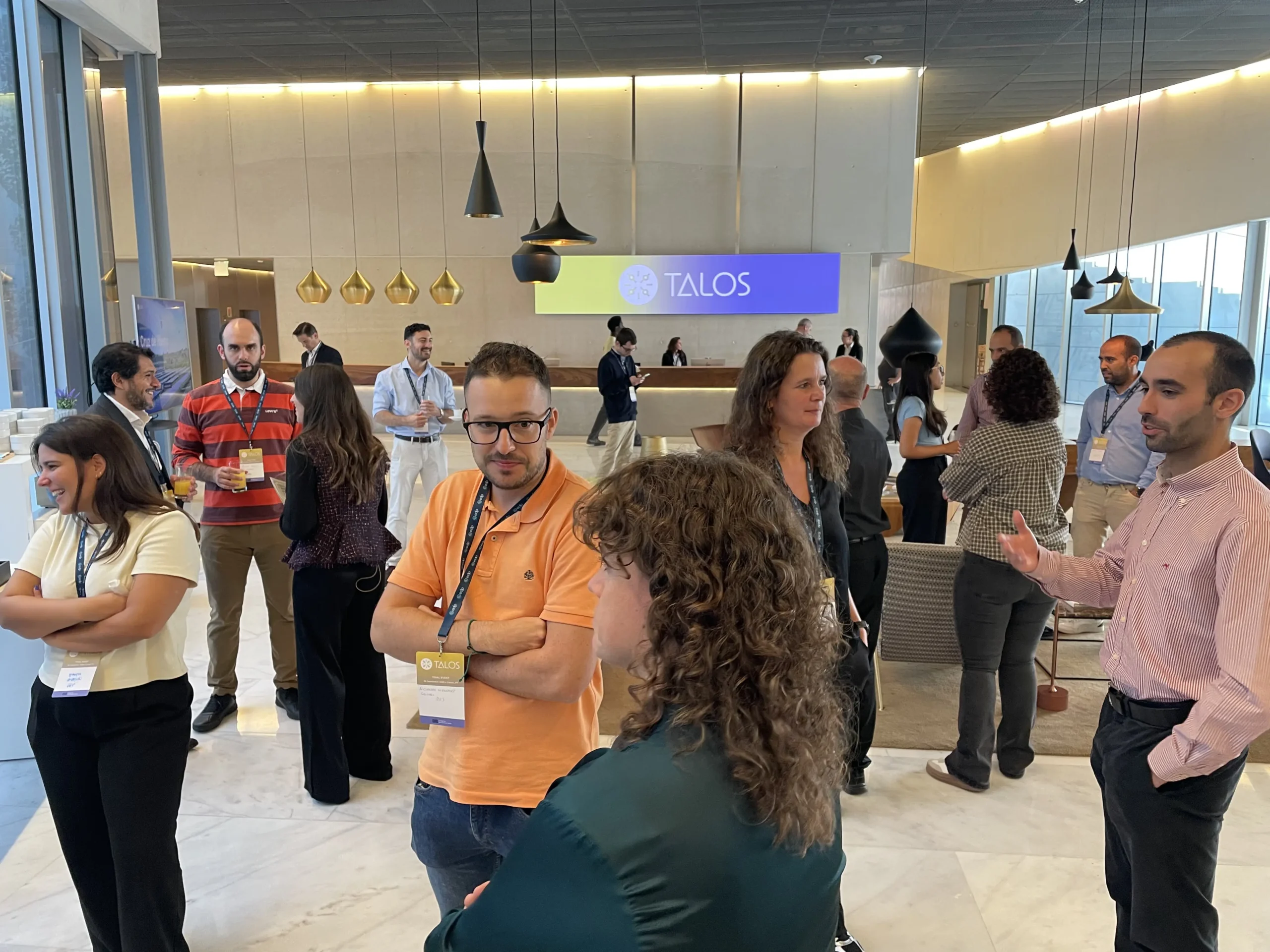
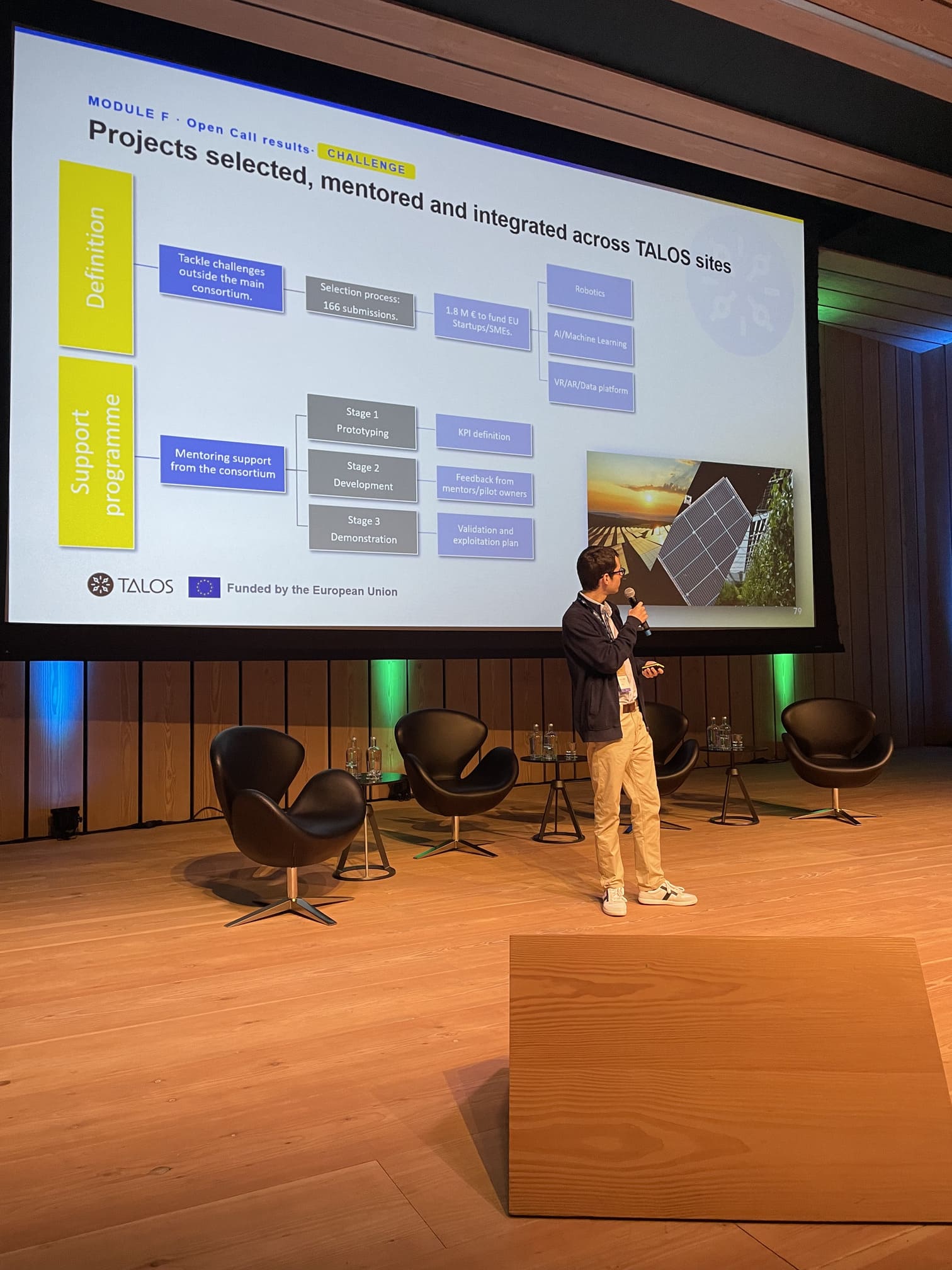
The occasion was the results and impacts session of the TALOS Final Event, held at EDP’s headquarters on 24 September, in the slot straight after lunch. Pedro Miguel Albuquerque, João Gaspar and Daniel Albuquerque, of EDP, did the presenting. What they presented belongs to the whole consortium: the platform and the data store from ISOTROL and ALISYS, the inspection systems from INESC TEC, the cleaning and mowing machines from SolarCleano and DTA, the orchard robot from AUA with crop monitoring from EdenCore and energy management from CERTH, the pilot teams who ran all of it in the field across three summers, and the twelve companies brought in through the Open Call that FundingBox managed.
Three years of that work, measured, and laid beside what the project had committed to in 2023. Most of the commitments were met, several of them comfortably. One was missed. One came back with a different answer to the question that had been asked.
The measurements come from three plants that were working the whole time. Cruz del Hierro, on the Castilian plateau near Ávila, is a 28 MWp solar park inside a larger hybrid site. Alqueva, in the Portuguese Alentejo, is a 5 MWp array floating on a reservoir. Randwijk, in Gelderland, is a pear orchard with panels above the rows and a crop underneath that still has to be picked.
The thing being tested
What TALOS built is a way of running a plant, and it runs as a loop. The platform monitors the site, detects what is dragging output down, and works out what a fix would be worth in energy and in money. It then recommends the jobs in the order that pays, and stops.
Step four is a person. Missions wait on the plant manager, who can move a job to another day, send it somewhere else, hand it to a different machine or put it aside. Only then does the work go out, and even while it is running the team watches it on a live map and can stop it. Afterwards there is a short feedback form, and what the team writes there changes what the platform suggests next.
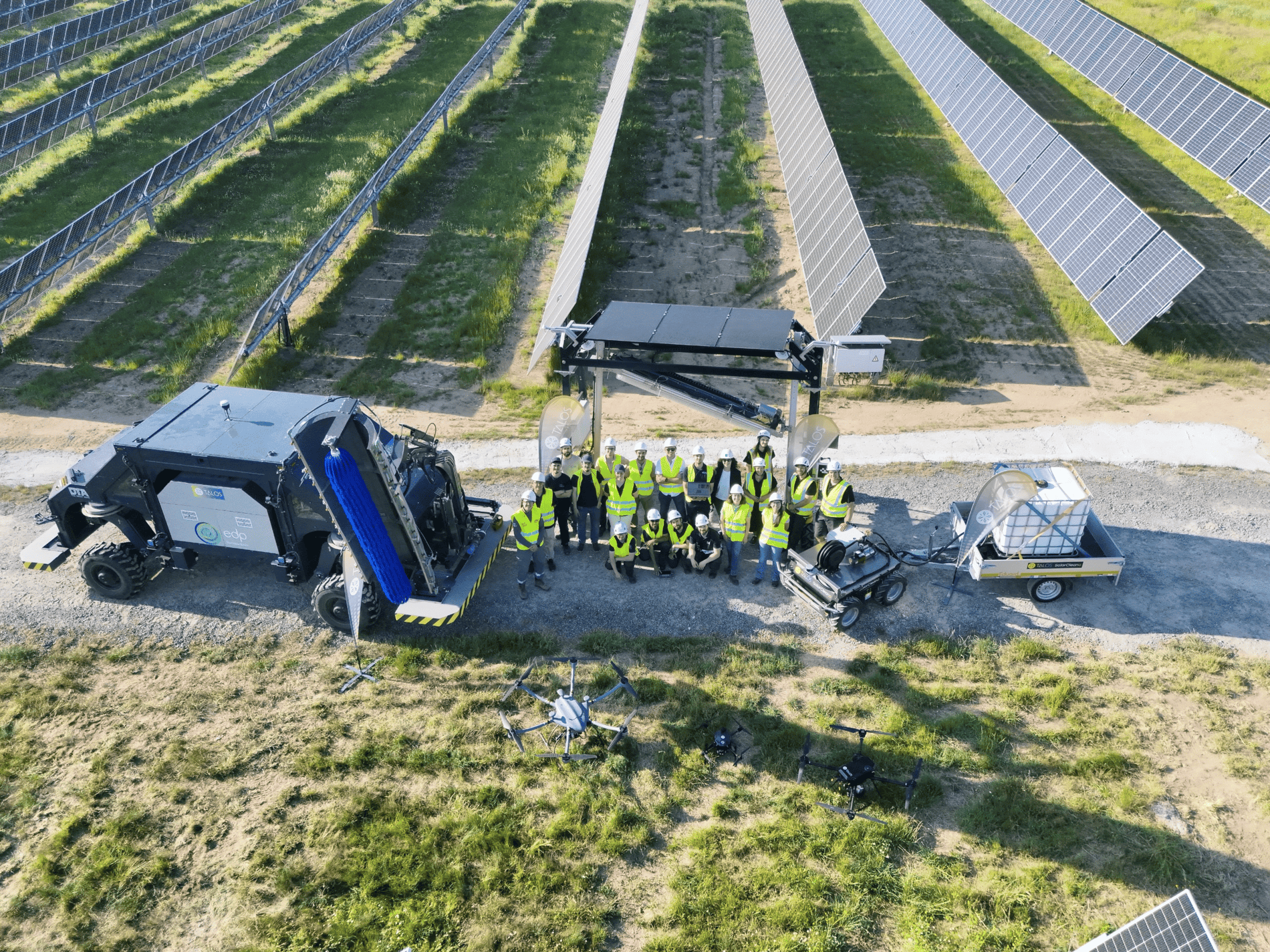
Around that loop the consortium delivered six building blocks: the platform and its AI tools, inspection, cleaning, vegetation management, AgriPV monitoring, and the extensions built by the companies that came through the Open Call. Eleven solutions in all were shown across the three pilots, and the demonstrations ran through the spring and summer of 2026, with trials going back to September 2024 on land.
Randwijk, where the pears are counted
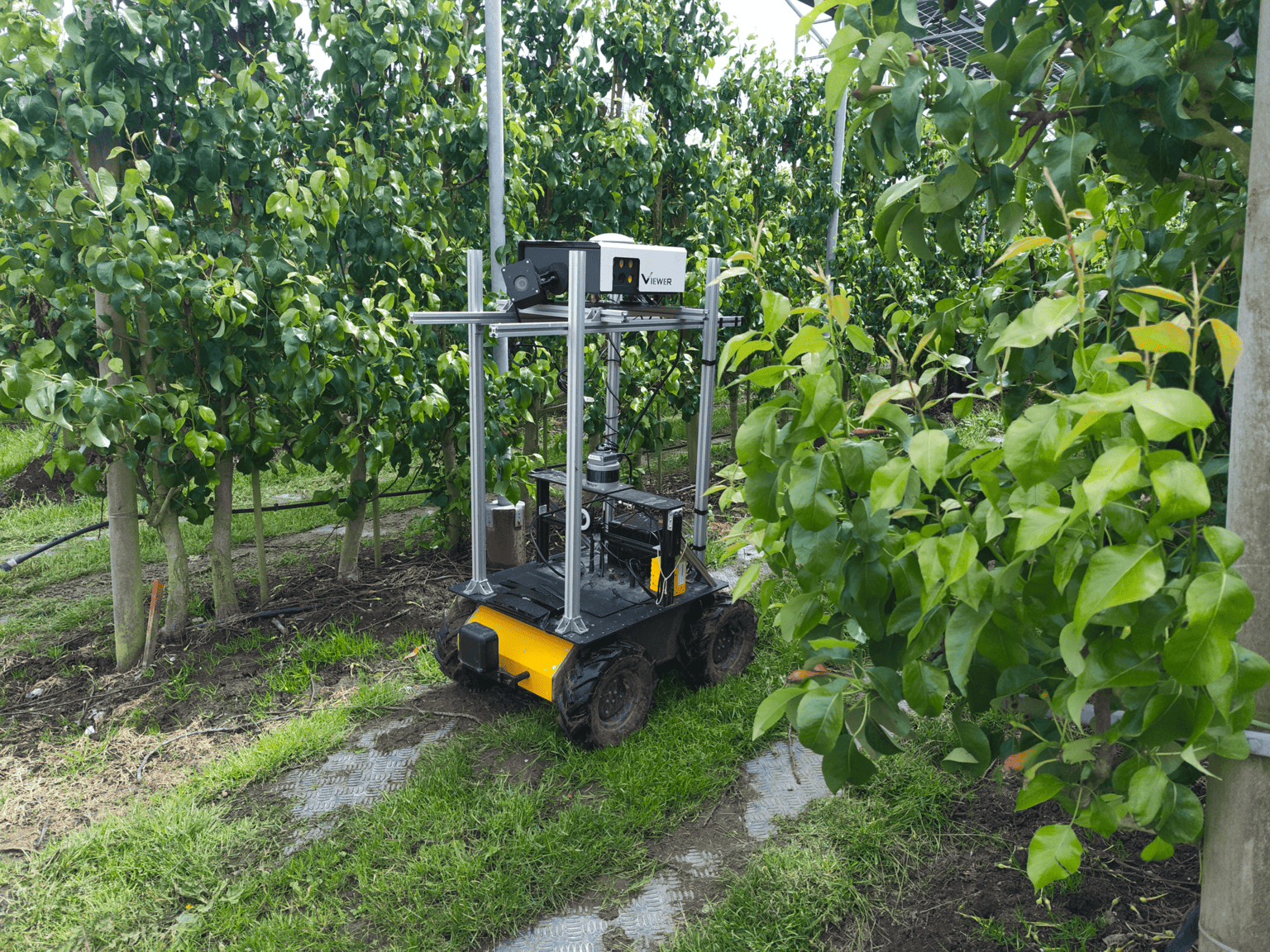
The orchard is the smallest site in the project and the most crowded, and it broke the usual assumption about satellite navigation. Under a roof of solar panels the signal is unreliable, so AUA’s ground robot fuses 3D LiDAR, RTK positioning and an inertial unit to keep track of where it is between the pear rows. An energy management system from CERTH tells it when to charge and which station to use, and the robot lines itself up on a visual marker to the centimetre and charges wirelessly. Nobody plugs anything in.
Riding along with it is EdenCore’s camera system, which looks into the canopy from underneath, which is the only angle from which a pear tree gives up its secrets: satellites and drones read a flat field well and a three-dimensional tree badly. Scouting time fell by 69%. Planning time fell by 99%, because the platform schedules the missions. The robot navigated and docked through the whole demonstration with no human intervention, and runs about 70 minutes on its present battery, which the team expects to double with the same robot concept.
Then the counting. Across four panel types the robot’s fruit counts came within 92.5% to 98.4% of the hand counts the growers made themselves. Forecasting the harvest is the part still being worked on: real-time prediction at the edge reached 77% against an 80% target, and the seasonal yield estimates ranged from 75% to 95%, with 2025 giving the better numbers. A warm 2026 brought the fruit on early, so the images were taken when the pears were still small.
The people trained to run all of this were growers and agronomists who had never operated a robot in their lives.
What was promised in 2023, and what happened to it
Plant performance was promised at +10% and delivered 12.6% on land and 28.7% on water. Operator risk exposure was to drop 90%, and it did, with the near-absence of human interventions per mission standing as the measure. Water use in cleaning was to fall by 35% and fell by between 50% and 67% at the land-based plant. Carbon avoided was set at 450 tonnes a year and came in at 800 on land and 270 on water, up to 1,070 tonnes across the two sites.
Maintenance time is the commitment that was missed. The target was windows 70% shorter, and the weighted saving across inspection, cleaning, mowing and scouting came to 55%. Which is a meaningful cut, and which is not 70%, and the team said so.
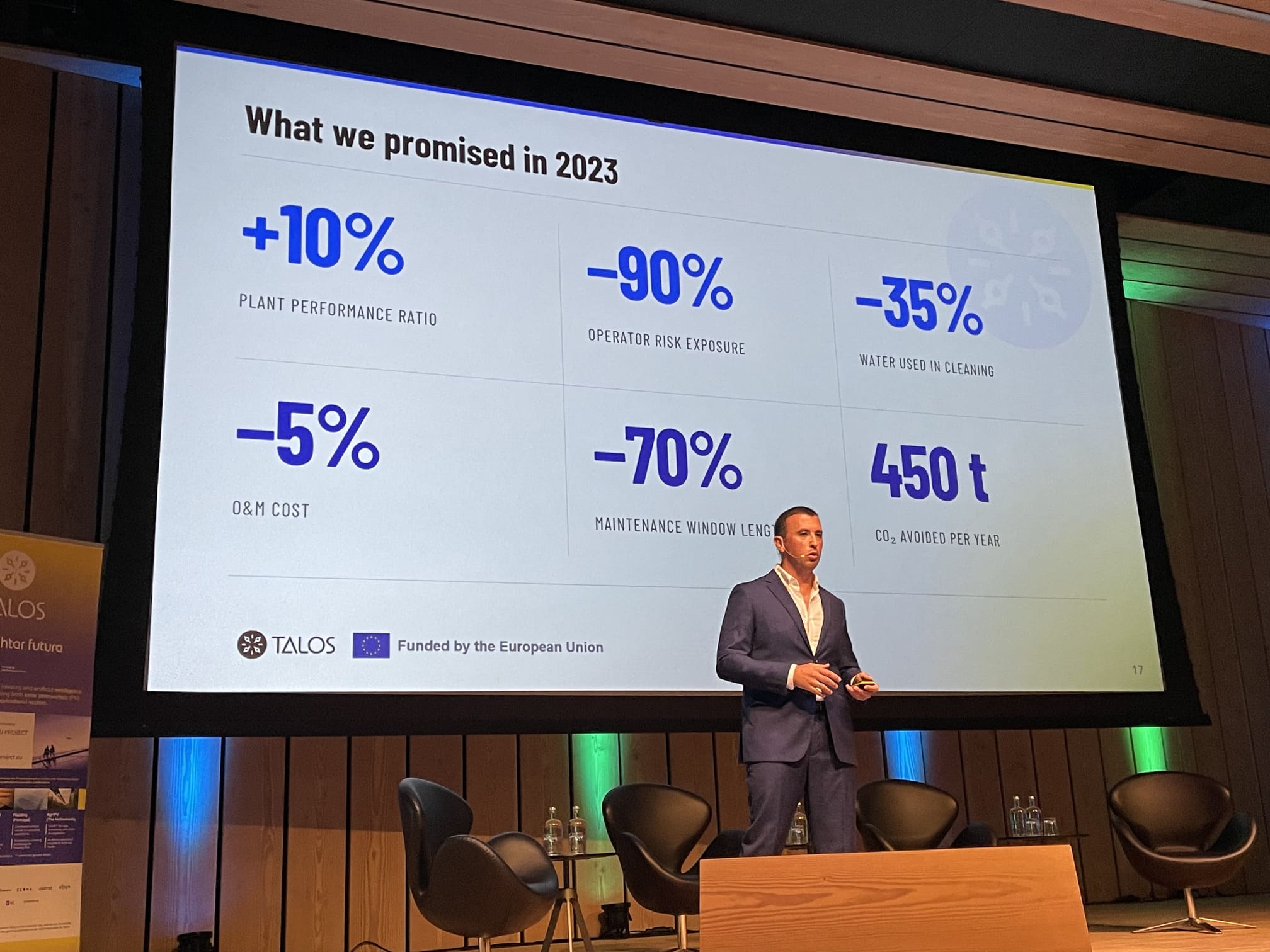
Cost is the commitment that changed shape. TALOS had promised O&M costs 5% lower. In practice the robots and the software are bought as a service, so operating expenditure went up, by 15% on land and 19% on water. What went down was the levelised cost of the electricity, by 2% and 16% respectively. Spending more to earn considerably more turns out to be the honest description of what happened, and the project reported the KPI as reframed rather than quietly moving the goalposts.
The economics, in one idea
Behind those cost numbers sits a model comparing each plant as it is run conventionally with the same plant running TALOS. On land, more frequent cleaning cut soiling losses from 6.5% to 2.0% and earlier fault detection added 0.7% to availability, taking the cost of electricity from 39.3 to 38.7 euros per MWh with one cleaning robot, and to 38.5 with the robot that mows as well. On the water, the fall was from 121.6 to 102.0 euros per MWh.
The idea underneath is simple enough to travel. Cleaning and inspection get done as rarely as a plant can stand, because every visit costs money and trouble. A dedicated robot makes the next visit nearly free, so the plant can be cleaned right after the week that dirtied it, which is exactly when cleaning pays. Scale decides how far the argument goes. On a big site the cost of the whole ecosystem is diluted and each piece stands up on its own; on a small one the frequent cleaning has to carry everything, and the platform or the drones bought alone would each add about 1% to the cost of electricity. Curtailment was left out of the model, and adding it is on the list for after the project.
What the teams learned the hard way
The pilots also produced a candid list of what got in the way. Remote sites with weak coverage, wind, winter and airspace rules. Rocky slopes and tight row ends. Satellite positioning under panels. The weight of water and the energy a mower gets through. Legacy SCADA systems that keep their data to themselves, and a platform interface that arrived later than anyone wanted.
The answers were practical ones. Trailers, sprinklers, rails and swappable power packs. A winter-grade drone where the weather demanded it, and an uncrewed surface vessel in place of the boat originally planned at Alqueva. RTK navigation with LiDAR support in the orchard. Human validation at every stage, and a feedback form after every job.
What the teams want next: drone-in-a-box operation, flights beyond visual line of sight, rails along a whole plant, longer pilots across several seasons, and an agreed roadmap for the platform beyond September 2026.
Six gaps in the rulebook
The last stretch of the session turned to what scale now needs from policy, and the evidence from all three pilots points to the same six gaps. Rules that differ from one member state to the next. Liability that nobody has settled when an autonomous system causes harm. No certification pathway. Unresolved rights over O&M and cloud data. A wider attack surface as machines come online. And 4G and 5G coverage at remote sites that is not up to real-time autonomy.
Each pilot adds its own. Land-based robots fall between machinery, vehicle and drone rules and need a category of their own for autonomous systems in energy infrastructure. Floating PV answers to energy, water, aviation and environmental rules at once and needs a single pathway through them. AgriPV needs a legal identity as dual-use land, support for the cost of structures and robots, and the kind of evidence a farmer actually believes, which is the sight of a neighbour’s field doing well.
Three questions went forward to the closing roundtable: what an automation-ready site and O&M contract look like, which certification and airspace rules have to move first, and who carries the upfront cost. With them came three invitations. Asset owners, open your sites for longer pilots. Technology providers, design for integration and certification from the first day. Policymakers, give autonomous O&M a clear rulebook.
Everything is online
The policy brief, the six technical briefs and the three training frameworks are all in the Resources section of the TALOS website, free to download. They hold the method, the evidence and the working guidance behind every number above, and the names of the partners who produced each piece of it.
TALOS closes on 30 September, three years to the month after it started. The slide the room finished on put it well: the technologies, the evidence and the partnerships continue beyond today. Somewhere on the Alqueva reservoir there are panels that are cleaner than they have ever been, and in a Dutch orchard there is a robot that knows how to find its own plug. That is a good note to end on.
