|
TALOS Newsletter · Final Edition
|
| |
|
Dear readers,
This is the last time you will hear from us. TALOS closes on 30 September, three years to the month after it began, and we would rather sign off by handing things over than by saying goodbye.
So here is what we are leaving behind. A policy brief for the people who write the rules. Six technical briefs for the people who run plants and build the machines that work in them. Three training frameworks for the teams who will be standing in front of the screen at eight in the morning deciding what happens next. All of it is online, free, and ready to use. The download buttons are below.
First, though, a look back at last week in Lisbon, where the consortium met for the final time. |
| |
|
Final General Assembly & Final Event
|
| |
|
General Assembly: One last time around the table
|
| |
|
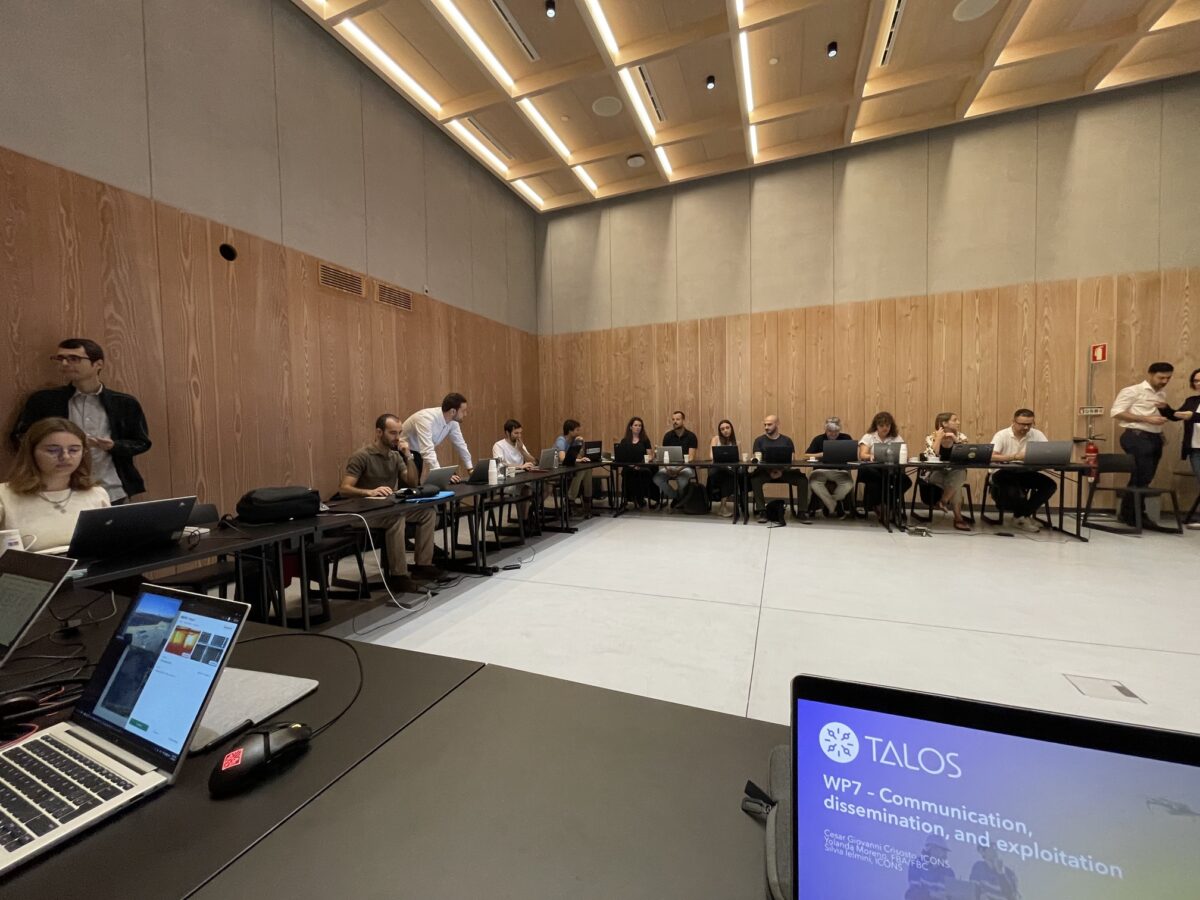
On 23 September the TALOS partners gathered in Lisbon for the project’s final General Assembly. One by one, the partners presented the work they carried out over the three years, and for many of us it was the first time putting faces to the voices we had been working with since 2023.
The same results went public the following day at the Final Event. |
| |
|
Final Event: the numbers on the table
|
| |
|
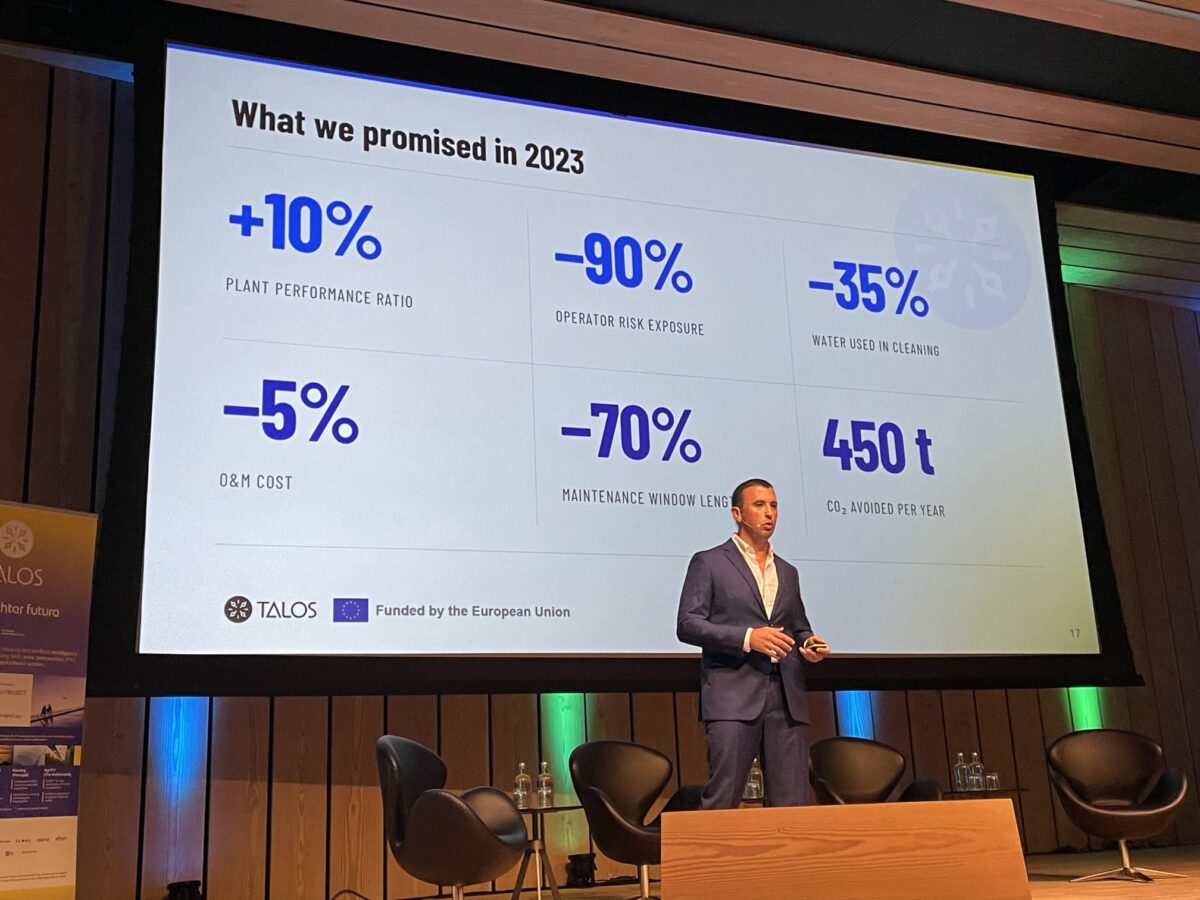
EDP’s headquarters in Lisbon hosted the TALOS Final Event, and the whole day was built to answer one question: after three years at three working solar plants, what can this actually do?
A few of the answers:
- +28.7% plant performance at the floating plant on the Alqueva reservoir, against a target of 10%, largely by cleaning bird droppings off the panels twelve times a year instead of three
- 0 to 1 human interventions per mission at the land-based plant at Cruz del Hierro, where cleaning missions ran 89% faster and their planning 99% faster
- 92.5% to 98.4% accuracy when the orchard robot at Randwijk counted pears against the growers’ own hand counts
- 16% lower cost of electricity at the floating plant, and up to 2.1% lower on land
None of it ran on its own authority. Every mission waited for the plant team to approve it, could be stopped at any moment, and was reviewed by the people who ran it afterwards. |
| |
|
The engineering is ready. The rulebook is what sets the pace.
|
| |
|
Autonomous machines can already inspect, clean and mow a solar plant. Whether they reach Europe’s solar fleet at the speed the energy transition needs is now largely a question of law.
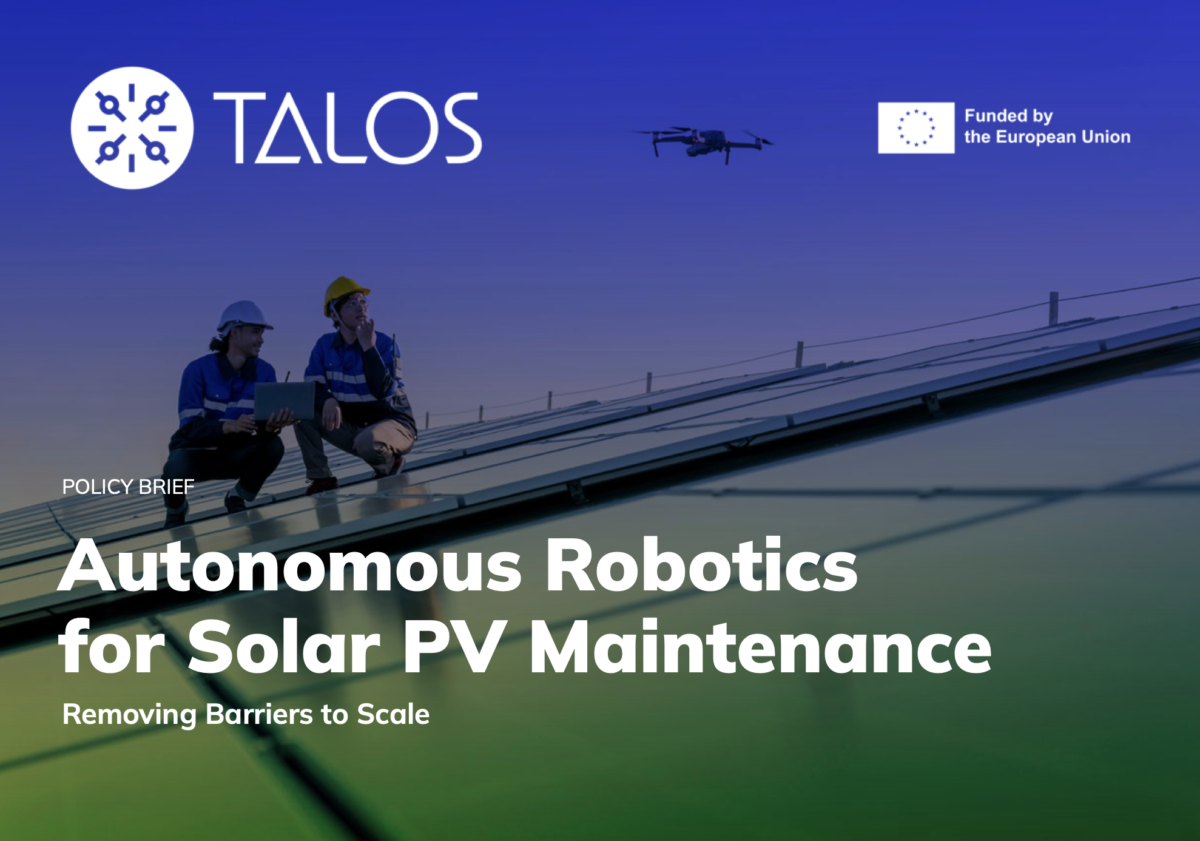
Autonomous Robotics for Solar PV Maintenance: Removing Barriers to Scale is built on three years of demonstrations at a hybrid plant in Spain, a floating array in Portugal and an agrivoltaic orchard in the Netherlands. It maps what got in the way at each of them, from liability nobody has settled to the missing EU legal definition of agrivoltaics, and turns that into recommendations with dates on them and named owners: the European Commission, EASA, the EIB, CEN/CENELEC and national authorities.
It was written for the people drafting the next revisions of drone, machinery and agricultural rules, and it shows them how those rules look from the plant floor.
Published under a Creative Commons BY-NC-ND 4.0 licence. |
| |
|
Six briefs, and a plant that asks before it acts
|
| |
|
Every one of the six technical briefs opens on an ordinary working morning. A plant manager sits down, opens the platform, and finds three jobs waiting: a cleaning run on the dirtiest section, a mowing pass, an inspection of an area that has been underperforming. She approves the cleaning and the inspection, and holds the mowing until the ground dries out.
Nothing leaves the yard until somebody has said yes. That approval is step four of six, and the whole method is built around it: monitor, detect, recommend, validate, execute, report.
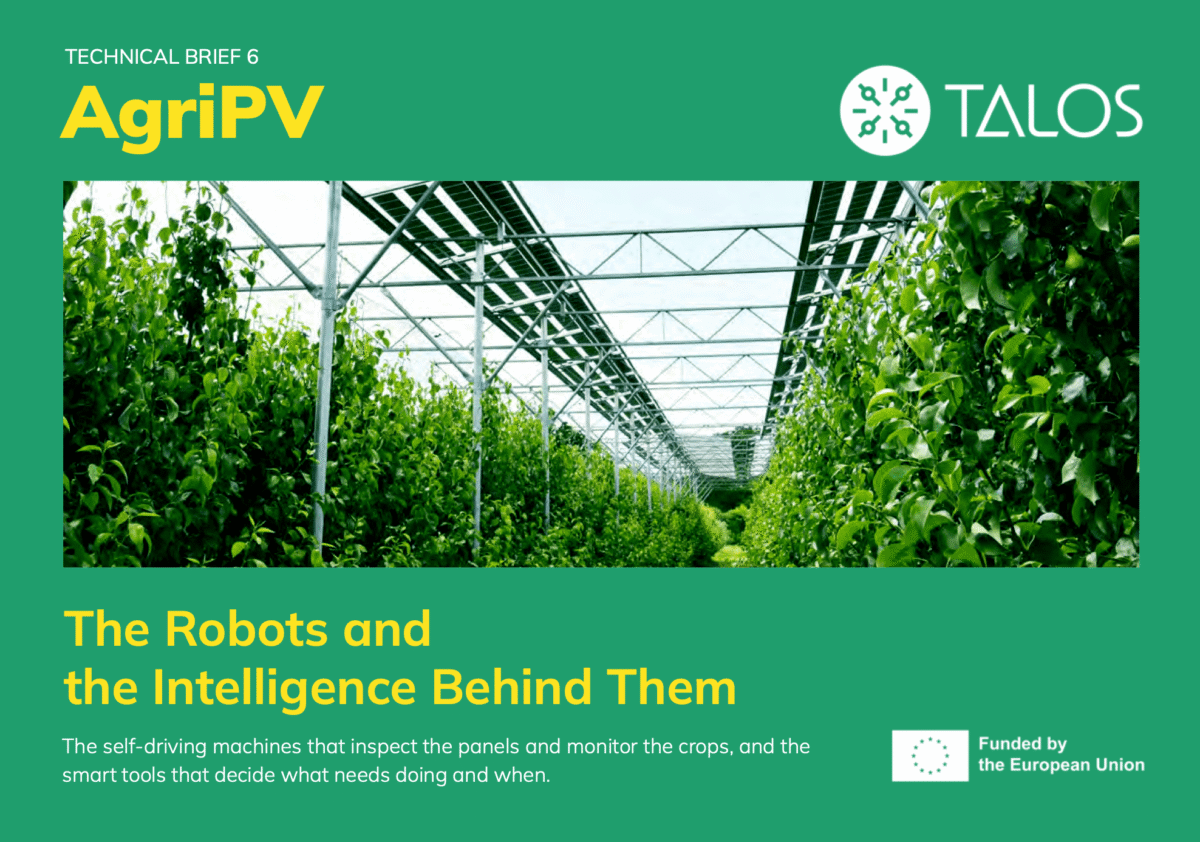
The briefs come in pairs, one pair per pilot. Briefs 1, 3 and 5 are about the platform, for operators, asset managers and plant owners. Briefs 2, 4 and 6 are about the robots and the software behind them, for robotics providers and technology partners. Each runs a few pages, with a glossary, a workflow diagram and the partners behind each piece.
Land-based PV · Cruz del Hierro, Spain
Floating PV · Alqueva, Portugal
AgriPV · Randwijk, Netherlands
|
| |
|
How to work with a system that waits for you
|
| |
|
At Randwijk the training was written for growers and agronomists who had never operated a robot in their lives, and that tells you who these frameworks are for: the people who will actually use this, not the people who built it.
All three follow the same path. An introduction to the project, then a full walkthrough of the TALOS collaborative environment, from the login screen to the device pages, the dashboards and the mission widgets. Then the machines at that particular site. Then the three-session training format the consortium used to gather feedback from end users during the demonstrations, and to change the platform on the strength of it.
AgriPV · pear orchard, Randwijk (Netherlands)
Agrivoltaics and the platform, then the ground robot with its autonomous navigation, obstacle and crop detection and automatic docking, and the AI crop monitoring system riding on top of it. |
| |
|
Floating PV · Alqueva reservoir (Portugal)
Mission format and dashboards for the 5 MW floating plant, the inspection drones and the uncrewed vessel that carries and charges them on the water, and the cleaning robot with its docking station and the operator checklist for safe deployment. |
| |
|
Land-based PV · Cruz de Hierro, Ávila (Spain)
The platform end to end, from data ingestion to mission execution, then the inspection drones and the two ground systems that clean and mow, with their safety systems and navigation, closing on sample mission files. |
| |
|
Thank you, from all of us
|
| |
|
Three years, three pilot sites, partners in seven countries, twelve companies through the Open Call, and a great many people who answered emails from a communication team asking for one more photograph.
Thank you to the partners who built this. Thank you to the plant teams who approved the missions, watched them run and told us afterwards what needed fixing, which is the part that made the system better. Thank you to everyone who came to Lisbon last week, and to everyone who has read these newsletters since the first one.
The project closes on 30 September. The website, the briefs and the training materials stay where they are, and info@talosproject.eu will still reach us. The technologies, the evidence and the partnerships carry on past today.
It has been a pleasure. Go and clean some panels! |
| |
|
Bonus Track (Past Activities)
|
| |
|
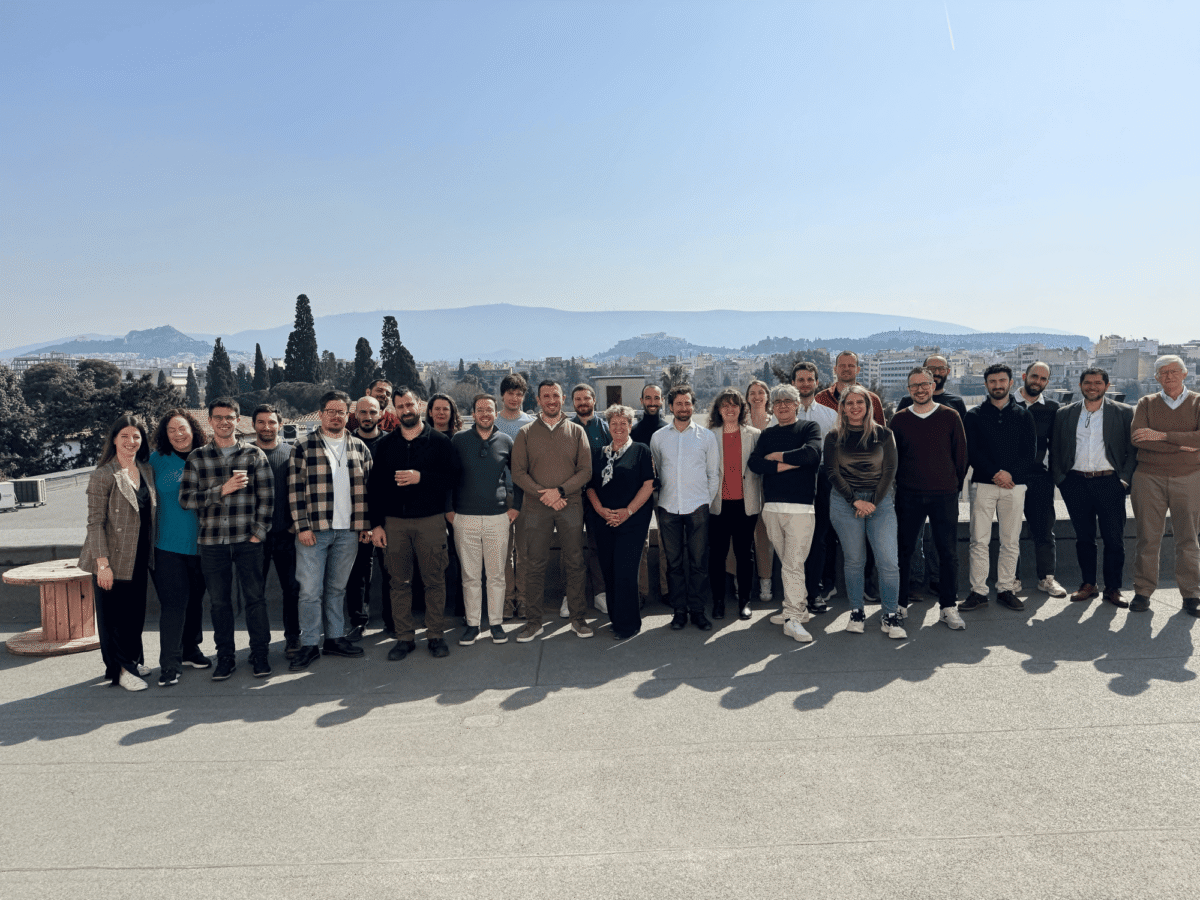
Beneath the olive groves of the Agricultural University of Athens, consortium partners and stakeholders from across Europe convened on 4–5 March 2026 for the project's 5th General Assembly — two intensive days marking the moment TALOS entered its final stretch.
Day one covered the work packages on AI tooling, led by ISOTROL, and multi-purpose coordinated robotics, led by INESC TEC, DTA and SCL, before turning participatory with two workshops: one mapping the technologies' readiness for market and joint commercialisation opportunities, the other examining the regulatory landscape around our three pilot scenarios.
Day two brought updates on the demonstration campaigns (EDP), impact and replication strategies (CERTH), and communication and exploitation activities (ICONS, FundingBox). The assembly closed with a visit to the AUA campus, the research environment behind the agrivoltaic strand of TALOS. |
| |
|
Back in March 2025, twelve projects were selected through the TALOS Open Call. Nine months later, the numbers tell a clear story about the appetite for this technology across Europe.
The call attracted 372 applications from 32 countries. Of the 166 formally submitted, 134 were eligible, 123 in scope, and 89 passed the technical threshold. Twenty teams were invited to Jury Day. Each selected project received up to €200,000 and nine months working side by side with our technical team — at real operational sites: Villacastín in Spain, Alqueva in Portugal, Randwijk in the Netherlands. No simulations, no labs. Open fields, real panels, real conditions.
The outcome is positive, but above all, it is honest. In light of the challenges addressed and the practical limits encountered, the results point to a genuine market appetite for the kind of technology TALOS integrates and deploys, and to a broader shift towards automated and sustainable management of photovoltaic systems. |
| |
|
One platform, many robots
|
| |
|
Everything above runs through the TALOS multi-robot management platform, the project's technical backbone: a single environment coordinating tasks among heterogeneous robotic agents, where stakeholders assign missions, teleoperate robots and monitor performance across sites.
Around it sit the project's key exploitable results:
- AI-based fault detection supported by digital twins of PV plants
- Autonomous ground and surface vehicles for cleaning, mowing and inspection
- UAVs for visual and thermal analysis
- A robot control and coordination platform with human-in-the-loop supervision
All of it connected through a cloud-based data architecture that lets robots, sensors and operators exchange information seamlessly. The data feed predictive models, so maintenance is scheduled precisely when and where it is most effective — prediction replacing reaction.
There is a circular logic here too. Charging stations are positioned to draw on surplus solar power, and AI algorithms schedule robotic missions according to real-time energy production. Maintenance stops being a cost centre and becomes part of the plant's energy efficiency. |
| |
|
TALOS joins ENLIT 2025: Real-world robotics, real-time insights
|
| |
|
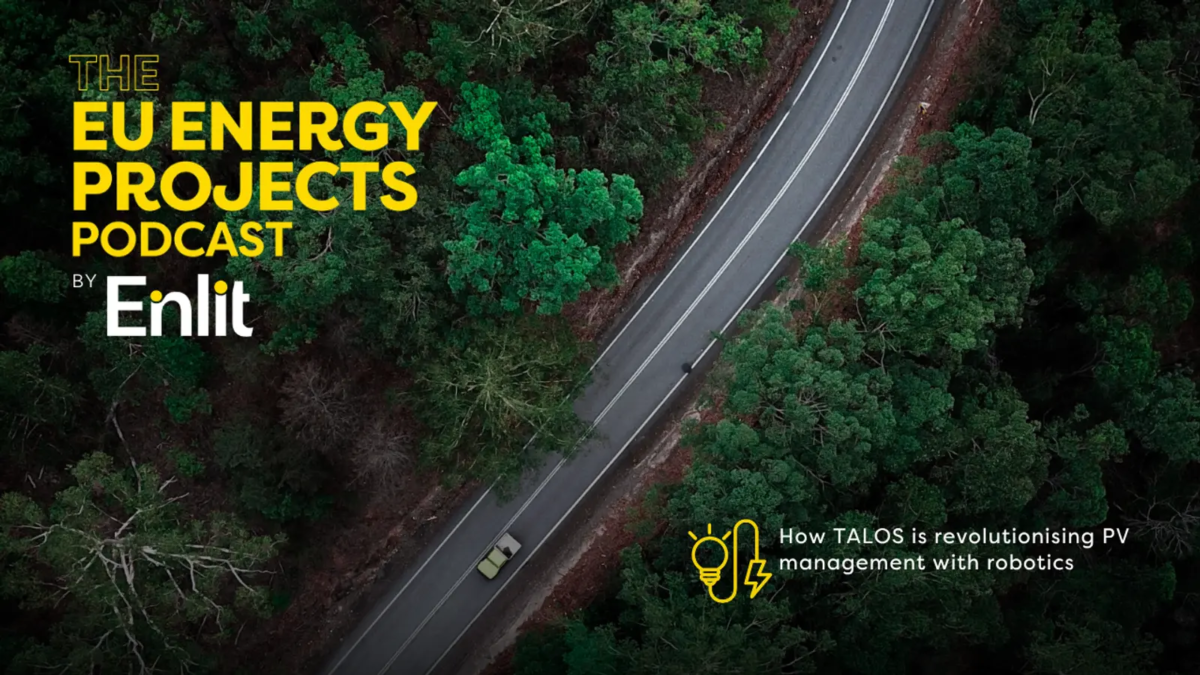
Our coordinator Daniel Albuquerque (EDP) featured on the EU Energy Projects Podcast, walking through how robotics and AI are reshaping PV operations and maintenance — from remote land-based farms, where access is hard and conditions extreme, to floating arrays and agrivoltaics.
TALOS also appeared on Enlit World with the article "From manual to autonomous: how TALOS is redefining solar operations", looking at the living-lab approach and what automated O&M means for costs, safety and skills. As the piece notes, O&M accounts for roughly a quarter of the levelised cost of electricity for PV — which is why automating it matters well beyond the robots themselves. |
| |
|
From 14 to 16 April 2026, TALOS took part in the Madeira Digital Transformation Summit in Portugal, a forum bringing together the European Commission, governments, academia and industry to turn digital policy objectives into real-world pathways across energy, manufacturing and smart cities.
For TALOS it was a strategic opportunity to meet stakeholders sitting exactly at the intersection of digital transformation and clean energy — to present our robotics and AI solutions for the PV sector, share the Open Call results, and explore new collaborations. |
| |
|
|
|
Funded by the European Union. Views and opinions expressed are however those of the author(s) only and do not necessarily reflect those of the European Union. Neither the European Union nor the granting authority can be held responsible for them. |
|
|
| |
|